Chaos Propagating
You’ve probably heard of chaos gardening before. If not, the gist is: scatter seeds, let them grow, don’t stress, don’t plan too much, and let nature do the rest.
After many failures at propagating succulents, I was ready to give up on the idea entirely. I’d tried nurturing individual cuttings of Burro’s Tail, String of Dolphins, and even some of the hardier stuff like Aeoniums. Some would rot. Some would dry out. Some would just sit there looking exactly the same for months until I eventually gave up and tossed them.
And I did give up for a while, though not before throwing a handful of leftover cuttings into a planter and calling it a day.
A couple months later I was itching to get out of the house, so I picked up my girlfriend and we headed over to Rolling Greens in Culver City. It’s one of my favorite nurseries in Los Angeles. The place itself is gorgeous: multiple levels, wooden structures everywhere, huge mature plants, and enough greenery that you forget you’re in the middle of a city.
I found plenty of plants I liked, but a lot of them were more expensive than I wanted to spend, especially considering how small they were and the fact that I wasn’t entirely convinced I could keep some of them alive. So I made a deal with myself: I’d spend some time propagating again, build up some confidence, and then come back later for the plants I couldn’t find elsewhere.
I also set some rules. The plants had to be hanging far enough over a public sidewalk that taking a cutting wouldn’t be noticeable, and they had to be large enough that they probably wouldn’t miss it. If anything, some of them could probably use a little pruning.
So I bought a new gardening tote with side pockets for my shears and started taking longer walks. Cookie, my foster dog at the time, absolutely loved this arrangement.
I’d come home with random cuttings from around the neighborhood and stick them into a couple rectangular planters that had been sitting mostly empty for months. I even started experimenting with placement. One planter went on the front patio where it got blasted with direct sun. The other stayed in my middle patio under a sunshade and, later, a tarp, where it received mostly indirect light.
To my surprise, almost everything took. There were a few casualties, but considering how many cuttings I planted, the success rate was way higher than I expected. They’re still small, but months later they’re healthy and growing.
Unintended Consequences
As I was now paying closer attention to which succulents were growing best based on their positioning, sunlight exposure, and density, I realized something. Succulents that were densely packed, often with seemingly “competing” species growing right alongside each other, were doing quite well, while sparsely clustered—or completely isolated—ones were faring terribly.
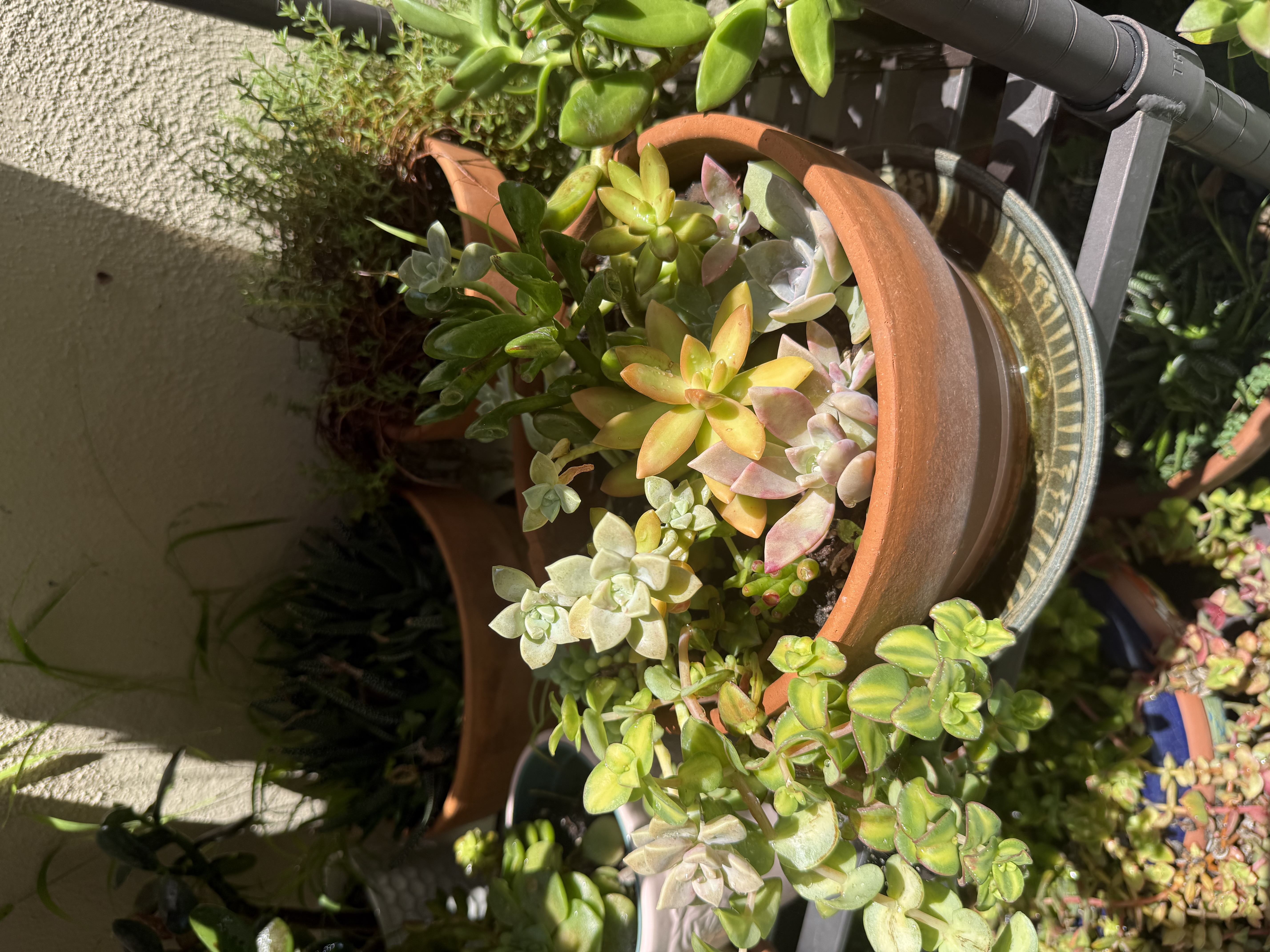 Chaotic but happy home.
On closer inspection, I realized the sparsely planted succulents were drying out much faster. The dense clusters were shading the soil, reducing direct sun exposure and helping it retain moisture for actual plant growth instead of letting it evaporate into the dry Los Angeles summer air.
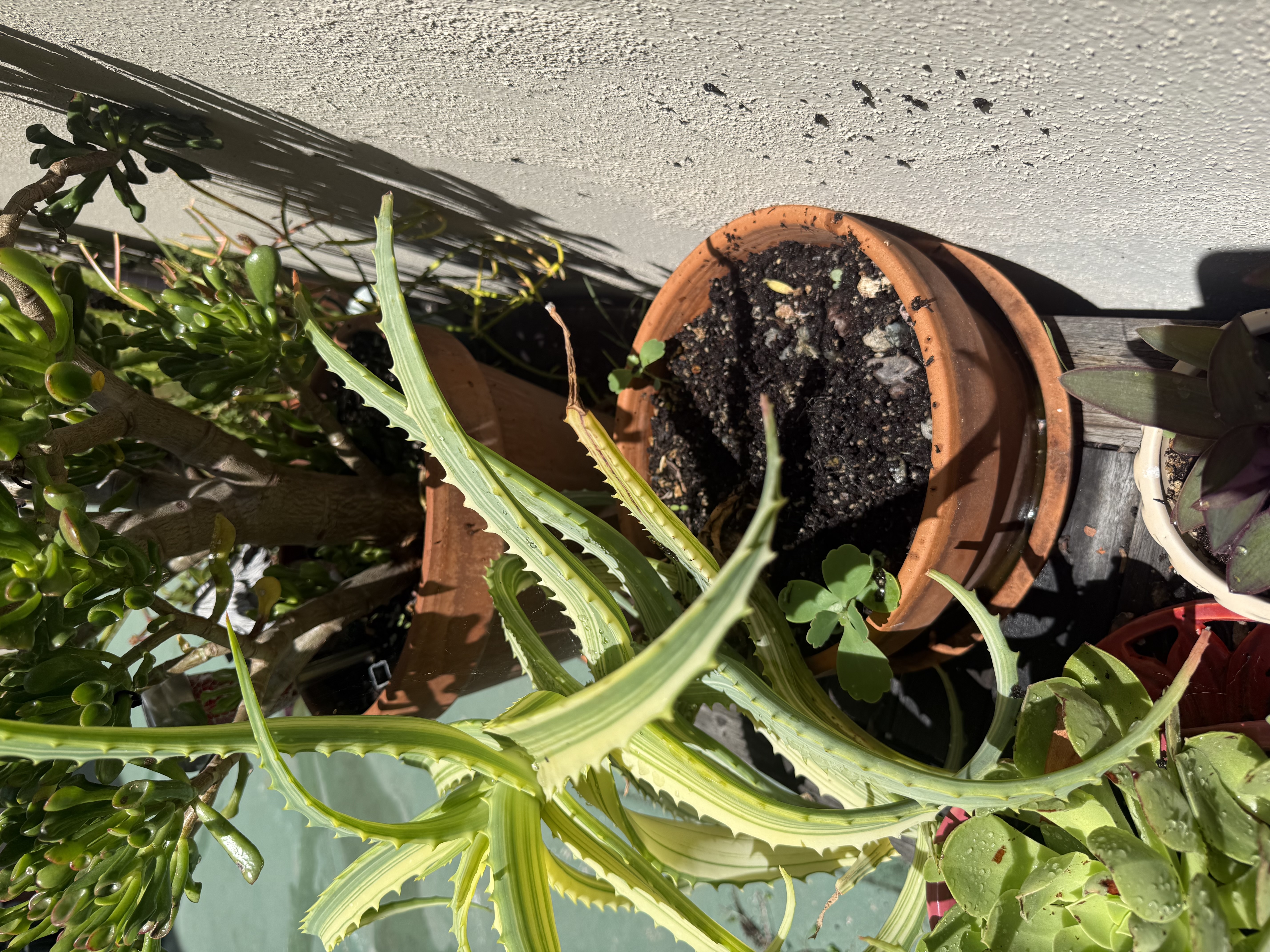 I swear this was bone-dry before I watered it.
This wasn’t even something I’d been looking for. I had been paying attention to the plants themselves, not the soil. But once I noticed it, I couldn’t stop seeing it.
A few days later, while repotting some larger plants, I found myself lingering on one of the Dracaena dracos on my front patio. It always seemed to dry out faster than everything else despite living in what should have been a perfectly adequate pot for its size.
Thinking back to the succulents, I made the connection. Most of the soil surface was exposed. The plant itself occupied surprisingly little of the pot, leaving plenty of dirt sitting in direct Los Angeles sun all day. So I planted some cuttings around it, along with a few other plants that had similar issues: tall plants, sparse plants, and vining plants that somehow managed to cover only a tiny fraction of the actual pot.
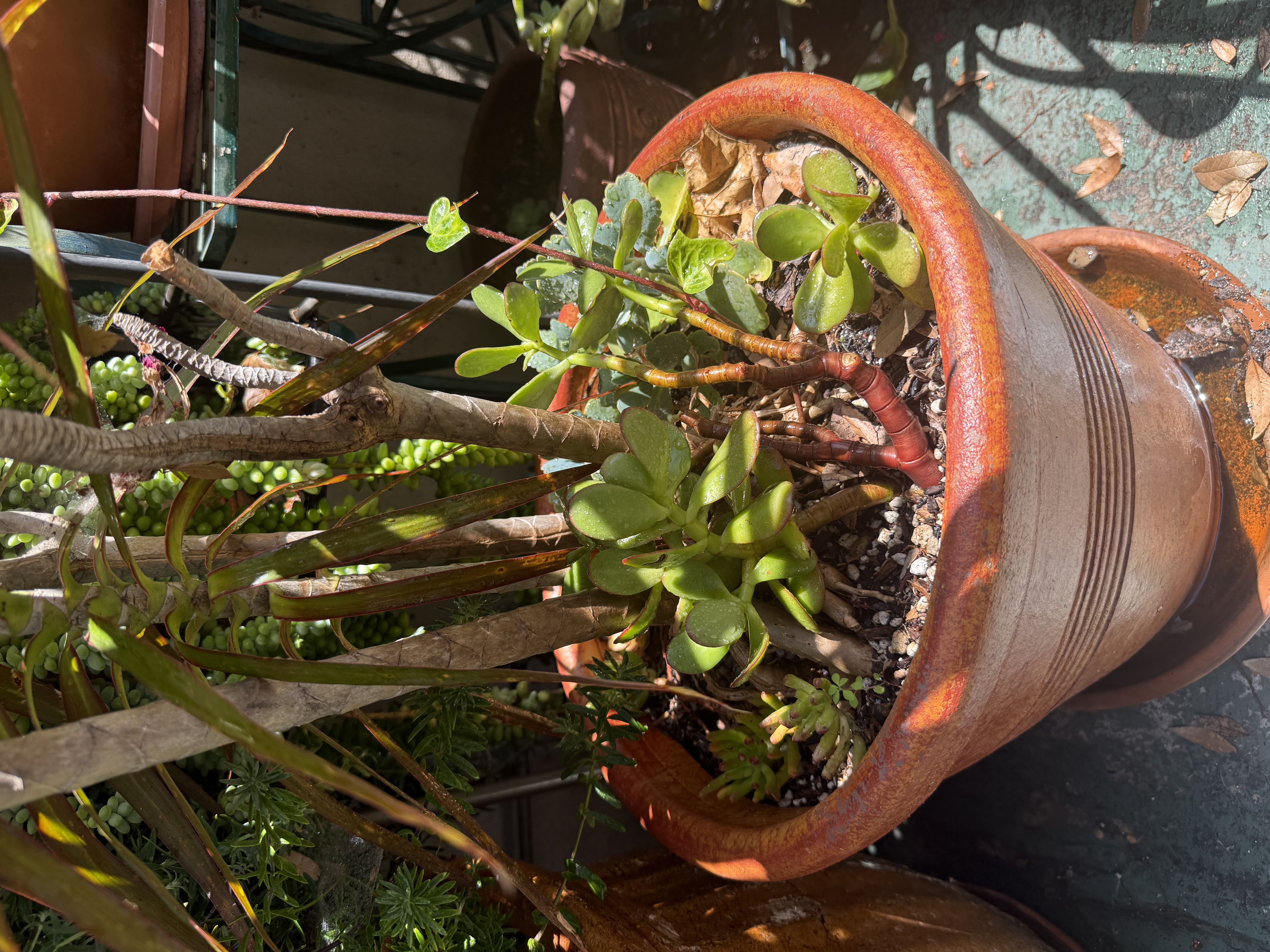 New neighbors.
I’m still experimenting with it, but so far the results have been promising enough that I find myself looking at containers differently now. Not as individual plants in individual pots, but as tiny ecosystems. Sometimes a plant’s neighbor isn’t competing with it at all. Sometimes it’s helping solve a problem you didn’t even realize existed.
Gardening from First Principles
One thing I keep running into with gardening is that plants don’t care what advice you got online, what somebody on YouTube said, or what a gardening forum told you. They just keep responding to their environment.
The more time I spend gardening, the more I find myself trying to work backwards from what I’m actually seeing instead of forwards from somebody else’s advice. Notice what’s growing well. Notice what’s struggling. Ask why. Change something. See what happens.
Gardening from first principles, I guess.
Observe, experiment, and listen to what the plants are trying to tell you.